My role
Service & Interaction Design Lead (3 months solo)
Timeline
6 months
Scope
7,000 developers, 6 countries
Team
1 PM, 1 VD, 1 Content
The Real Brief
Management wanted an internal portal: one place for 7,000 developers across 6 countries to find processes, tools, and best practices instead of rebuilding the same solutions from scratch.
My first reaction wasn't excitement. It was doubt.
Accenture already had too many internal portals. My read from day one: adding another would deepen the chaos, not fix it. But that was a hypothesis — so I led with research, not wireframes.
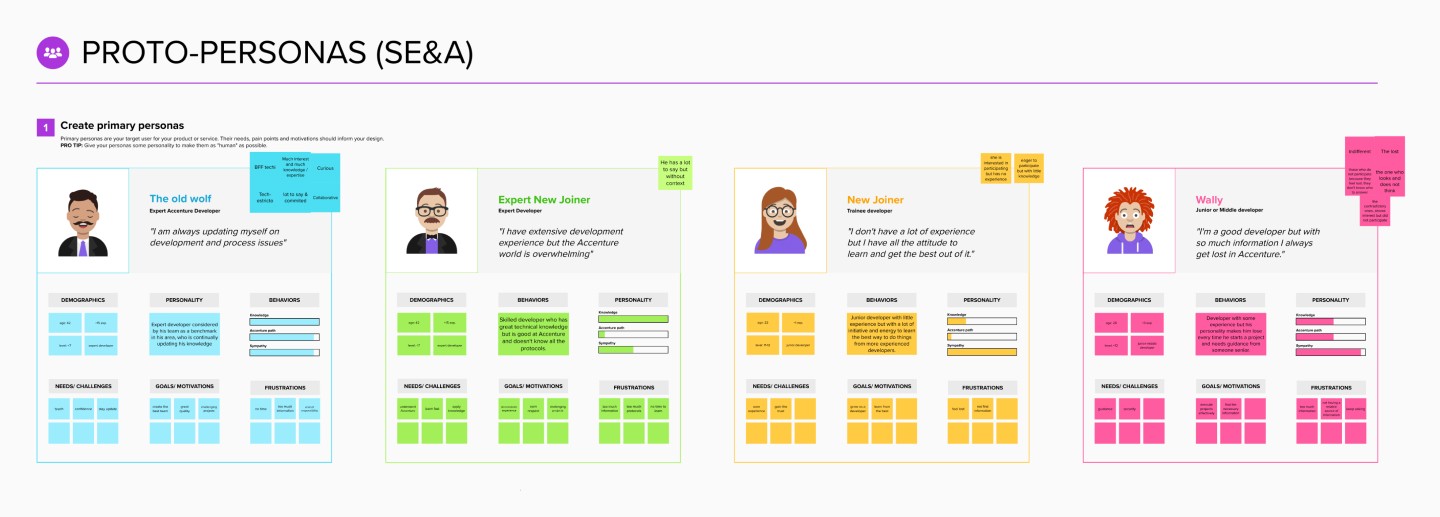
proto-personas / developers Mindsets

co-creation workshops / synthesis
The Constraint
A single entry point only works if someone owns what lives inside it — and content governance was already a political fight. Different development areas claimed the same technical knowledge, and none agreed. I could design a system that worked and still watch it stall on decisions I had no authority to make.
I flagged governance as the strategic risk in week one. It stayed the risk.
The real limit was never design. It was ownership.
The Call
Working solo for three months, every strategic decision was mine — research, methodology, facilitation, architecture. So I chose deliberately.
Design Thinking + Lean UX. Lean UX kept us fast enough for the timeline. Design Thinking gave me the structure to move developers from talking features to talking problems — critical, because they were technical thinkers who arrived with solutions, not needs.

prioritization workshop
The leadership decision that defined the outcome: make the developers the protagonists, not me. When a senior developer pushed back — skeptical, listing advanced processes we'd missed — I didn't defend the design. I gave him the floor and asked what was missing. He shifted from resistance to co-creation. Others built on him. The single-entry-point concept came from that room, not from me. My job was to bring the user voice to the table where decisions get made, then shape it into something buildable.
The PM ran logistics across six timezones — agendas, sessions, communications. Part of this working was his organization, not just my design.


Customer journey maps / proto-personas
What Shipped
The reframe held: not another portal, but a single entry point that centralized the chaos. From workshops we built a Product Vision Canvas — navigation, content, and search-across-Accenture, defined by developers ranking and defending their own priorities.
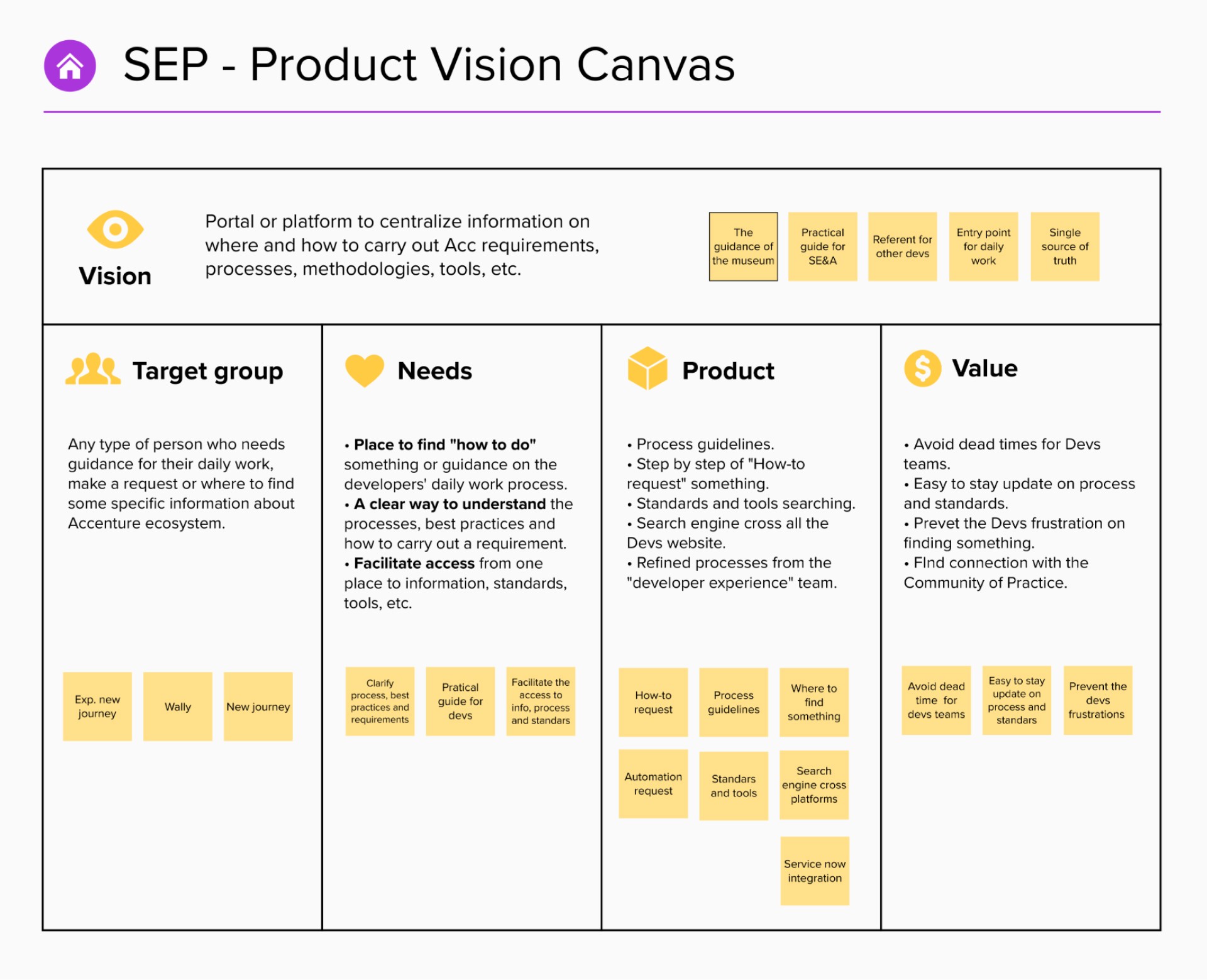
Product Vision Canvas
The information architecture failed first. I organized content by technical categories — structurally clean, but tree testing showed developers couldn't navigate it. So I simplified and built dual navigation: browse by category, or follow a step-by-step process. Two paths, because developers don't all think the same way.
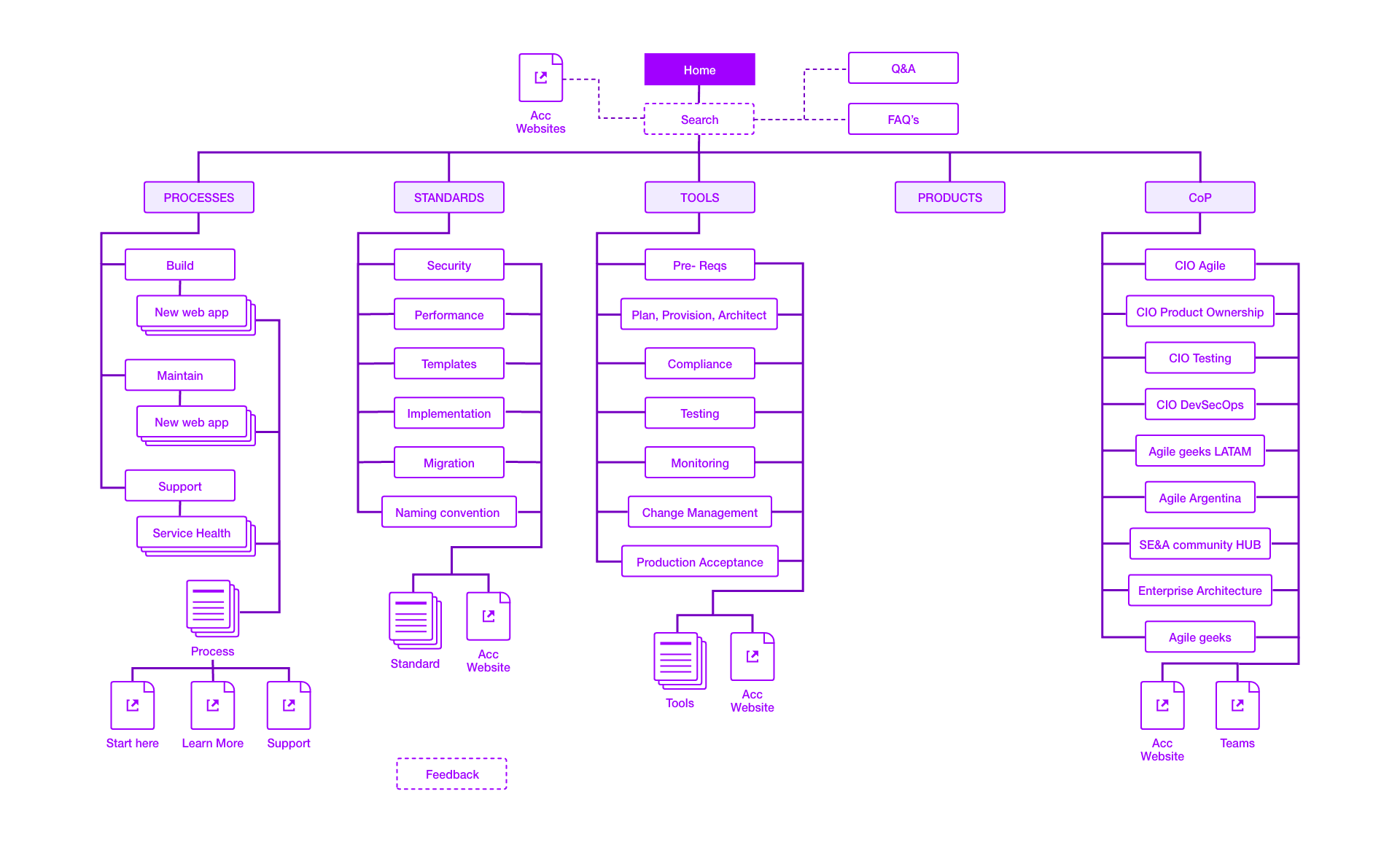
IA / dual navigation
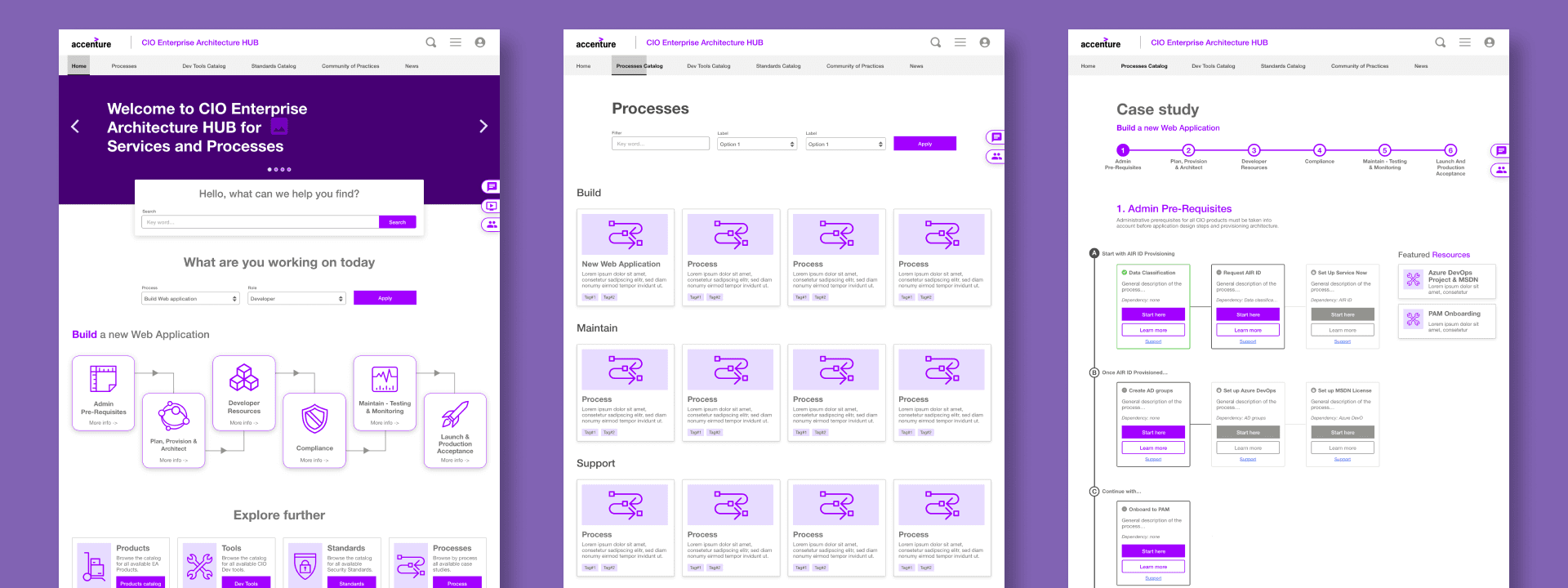
Visual and content designers joined at month 3. Handing off my own work was uncomfortable — but they improved it. We validated wireframes with the collaborators and iterated.
I left at six months, as implementation started. The MVP shipped with a main dashboard and first content flow. I never saw the live product — and content governance became the bottleneck, exactly as flagged.
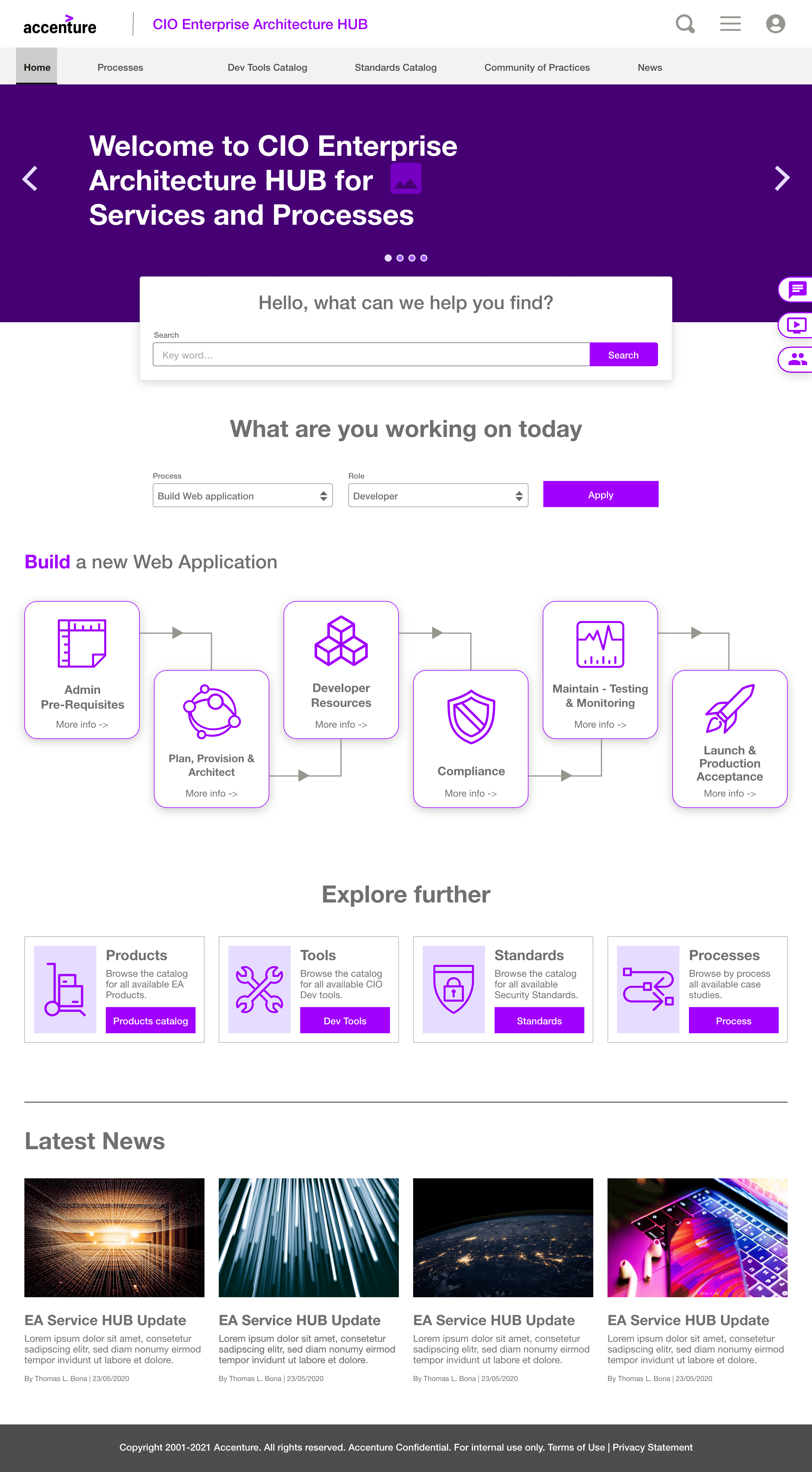
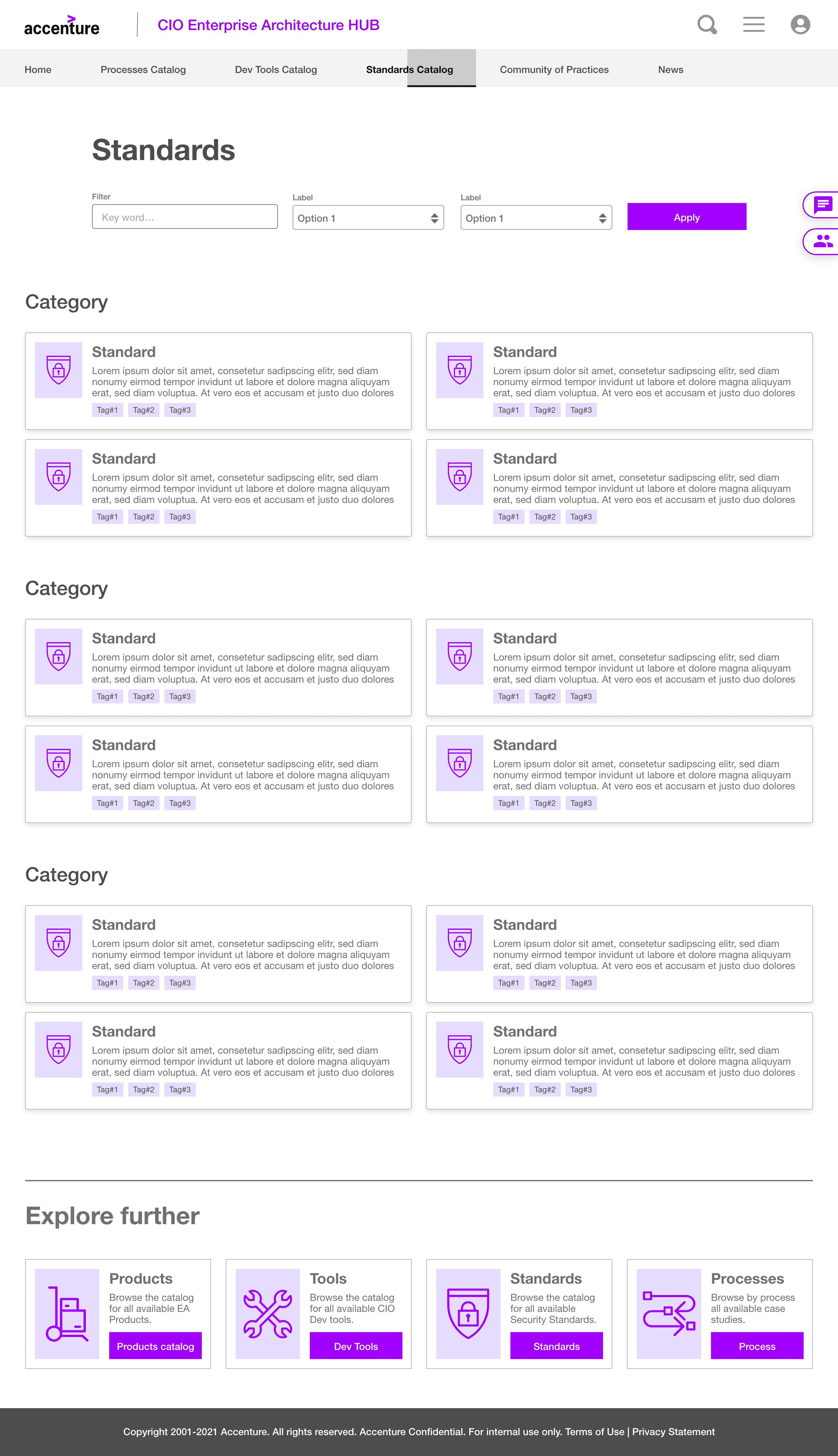
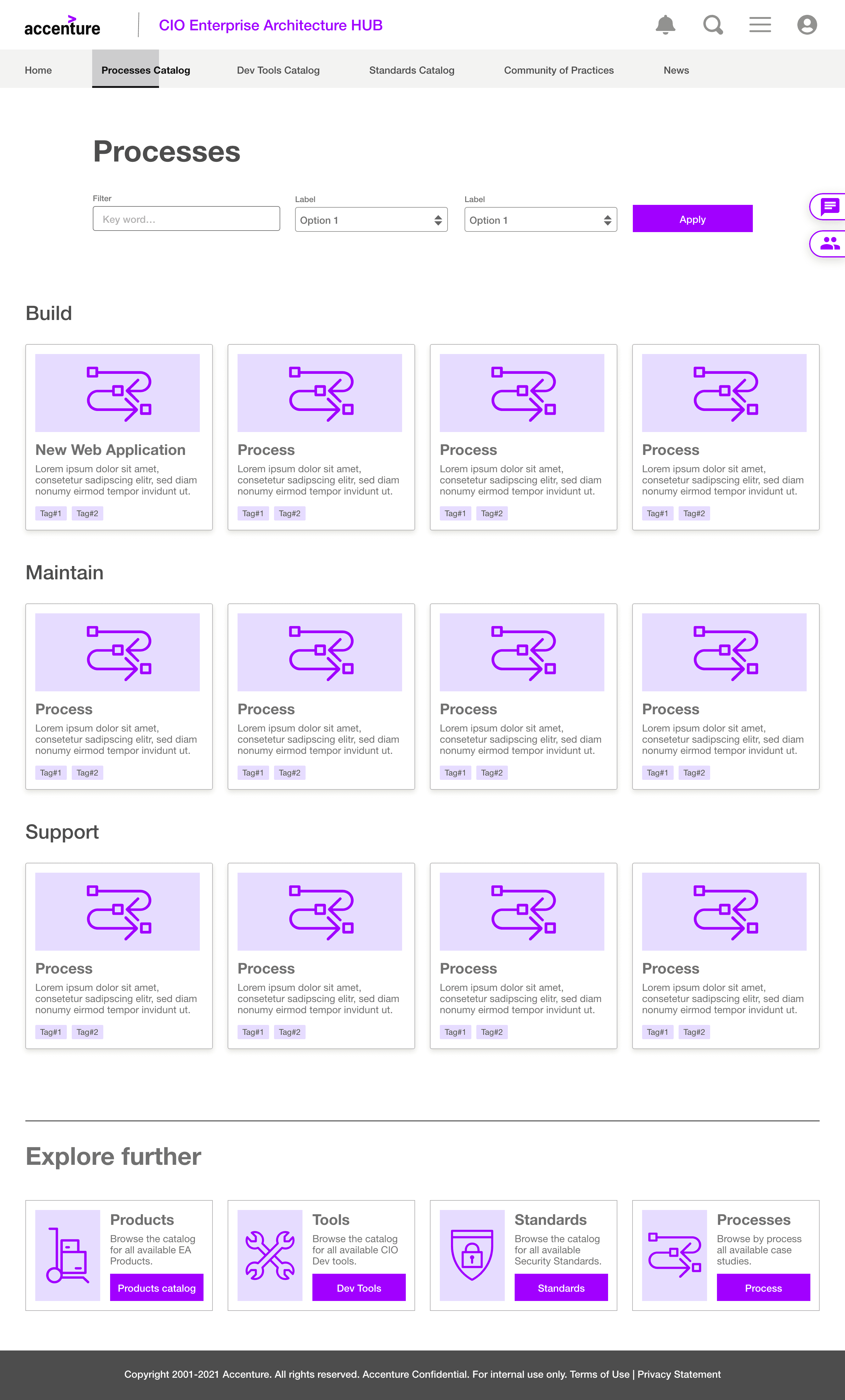


early wireframes
//engagement
25
developers stayed engaged from survey through MVP validation
//rewards
$ <3
Management rewarded them through Accenture's internal system
//visibility
*A
Other areas saw our process and requested design support from our team
Signal
25 developers stayed engaged from survey through MVP validation — invested enough to give six months to a tool they'd initially resisted. Management rewarded that collaboration through Accenture's internal recognition system. And other areas saw how the team worked and asked for design support of their own.
No impact metrics — I left before launch. What I own here is scope and judgment: reading the same frustration across six countries and shaping it into one system, solo, with full autonomy.